search
tune Filter your result
Filter close
Select filter keyboard_arrow_right
arrow_back Back to filters
compatibility and mixing

20.07.2020Ornamentals Advisory Blog

Performance-enhancing or just compatible – and how do we know anyway?

Victor Juma

Part of the process of finalising the formulation of a new crop protection product is to check its physical compatibility with other products. The product registration process distinguishes between ‘convenience’ tank mixes, such as the ones you might choose, for example to save your spray operator’s time; and ‘positive’ tank mixes where products are combined to improve results, such as when you add an adjuvant.If we give any recommendation about our own products in positive tank mixes – such as the use of our new adjuvant – it has to be backed by physical and chemical compatibility test data and by laboratory and crop trials data to support our performance claims. Incidentally, our tests take account of the influence of water quality because pH and hardness can make a big difference – and all of our own products are formulated with additives that buffer pH to the optimum range for the active ingredient.So, when we or our our advisers or agents tell you, for example, that our new adjuvant is compatible with a…
compatibility and mixing

06.07.2020Ornamentals Advisory Blog

Compatibility & Mixing: Best practice advice

Victor Juma

We’re currently in the process of finalising plans for the launch of our new ornamentals adjuvant. I’ll be telling you more about it soon but it’s also got me thinking about some of the ways of ensuring compatibility when products are mixed in your spray tank – whether you use a knapsack, trolley sprayer or tractor.We’ve already looked in a previous blog at the benefits of adding an adjuvant when you spray. In addition, you may sometimes consider using a combination of crop protection products or a liquid fertiliser or plant biostimulant.If you are considering mixing crop protection products, perhaps to save time and labour costs, remember that the different pests or diseases you may want to control may be much more effectively targeted separately, at different locations on the crop, or at slightly different timings. Mixing products, rather than applying separately, might also compromise your ability to alternate applications as part of your resistance management strategy.Don’t forget, that the more products…
spraysquare

01.07.2020Ornamentals Advisory Blog

Operators: Reducing your exposure levels

Victor Juma

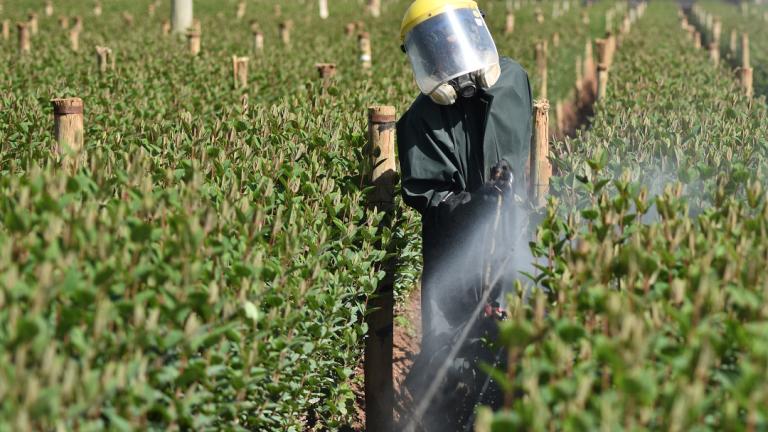
Welcome to the first in a series of new blogs that will help to advise you in the art of improving your spray applications and ensuring every spray counts.Despite Covid-19 giving us more challenges than we thought we would be facing in 2020, some challenges will remain: our spray operators exposure to crop protection products. For some of our crops, you are able to spray outside, but this is not always necessary and is always done by hand, the need for minimising exposure remains essential, whether you are indoors or outdoors. Year-round spraysThe year-round nature of this industry and low tolerance to imperfections can lead to regular applications of crop protection products to ensure high-quality blooms are produced. What can you do?For spray operators, the most likely route of pesticide contamination is absorption. This needs to be carefully assessed to ensure that effective control measures, including PPE, are selected and used. As small scale sprayers are used in different situations to…
thrips

22.06.2020Ornamentals Advisory Blog

Managing insecticide loss - the balancing act

Victor Juma

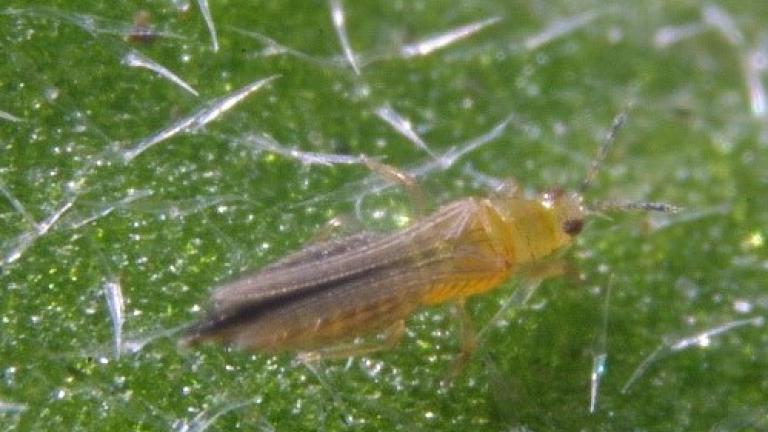
Anyone who has experienced difficulties managing insect pests such as western flower thrips will be only too aware of the implications of our ever-diminishing armoury of control products. Their short life-cycles mean they readily develop insecticide resistance if we can’t deploy enough different chemical, cultural or biological modes of action to foil their evolutionary ‘quick-wittedness’.In the last few years farmers and growers have seen substantial reductions in the range of crop protection chemistry they can draw on to control pests, diseases and weeds and that trend is likely to accelerate over the next couple of years or so. That in turn has repercussions for how we manage insecticide, fungicide and herbicide resistance because successful resistance management depends on having to hand more than one or two chemical modes of action.This gradual contraction of our crop protection toolkit is nothing new, of course, but it has come under the spotlight this year because the approvals of more than 190 active…
my_post_13

16.06.2020Ornamentals Advisory Blog

Product Development & Registration Series: Development & Launch

Victor Juma

In my last couple of blogs I’ve outlined what’s involved in finding new active substances and how our scientists develop them into safe and effective crop protection products.Given that we have to look at around 100,000 molecules to find just one which will eventually reach the market as a fungicide, insecticide, herbicide or plant growth regulator – a process that can take 8-10 years – you won’t be surprised to learn it’s not just time consuming but an eye-wateringly costly exercise.We spend as much as £350m to bring a new molecule to market and invest around £1.4bn a year on all of our R&D, which is why it’s so important we weed-out as early as possible those which won’t meet registration standards or prove commercially viable – even so, the early-stage research phase of product development can account for up to a third of the total cost. It also explains why all our new products for specialist crops such as ornamentals have to be based on actives targeted at crops of global significance – such as…
my_post_13

16.06.2020Ornamentals Advisory Blog

Product Development & Registration Series: Turning to Nature

Victor Juma

Syngenta’s chemists and biologists are some of the best and most experienced in the business – we employ around 5,000 scientists altogether – and in my last blog I looked at how they start the search for synthetic compounds that eventually form the basis of some of Syngenta’s new crop protection products for farmers and growers. More recently they’ve also been using their biochemical knowledge to identify sources of potential crop protection ingredients amongst the natural biochemistry of plants, fungi and bacteria. It’s not surprising really – evolution over millions of years has equipped each species with its own set of chemical defences against pests, parasites and pathogens while many also secrete compounds that prevent competitors coming too close.Of course, it’s not a new idea. As you probably know, pyrethroid insecticides are synthetic versions of naturally occurring pyrethrins, compounds originally discovered in the seeds of certain members of the daisy family.And abamectin, the active in our…
my_post_13

16.06.2020Ornamentals Advisory Blog

Product Development & Registration Series: In the Beginning

Victor Juma

We’ll have some truly innovative crop protection products for ornamentals to tell you about over the coming months. Launches always excite us, not just because of the potential to improve your control of pests, diseases or weeds and management of crop growth, but because any new product is something we’ll have been working on for a very long time.Developing chemistry-based products takes 8-10 years from the point when we discover a compound, to the stage where you can start treating your crops. That’s because plant protection products are among the most thoroughly researched, tested and regulated of anything you will use on your nursery.So in this and the next couple of blogs, I want to say a little about what’s involved in bringing you a new plant growth regulator or pest, disease and weed control product.It all starts with the search for molecular compounds with potential. In the beginningCarbon, hydrogen, oxygen, nitrogen and other elements like phosphorus, sulphur, silicon and chlorine can be…
ffts4

27.03.2020Ornamentals Advisory Blog

Covid 19 – Flowers feed the soul. But the soul of our flower industry is being ripped apart

Victor Juma

There is no doubt we are in challenging times now; this blog has been written by one of our colleagues in the UK. They entered formal lockdown on Monday 23rd March, the day after Mother’s Day where they had already been advised to practice “social distancing”, which meant not seeing family and friends.The flower industry in Kenya is entering some very difficult times, but it offers a little comfort to know that thousands of miles away, people think of where their flowers come from and the people that get them there.Victor. Covid-19. #FlowersFeedTheSoulNever has one phrase conjured up so much conversation and emotion as “Covid-19”. A quick Google of Covid-19 brings up 10.9 billion search results, while Corona Virus brings up over 17 billion results, all in 0.36 seconds.  The global flower industry is having its soul ripped out by Covid-19. There are many growers unsure of their future, if there is a future at all for their businesses. And it’s not just the businesses, it’s the…
root_knot_nematode

31.01.2020Ornamentals Advisory Blog

Getting the most from Tervigo for nematode control

Victor Juma

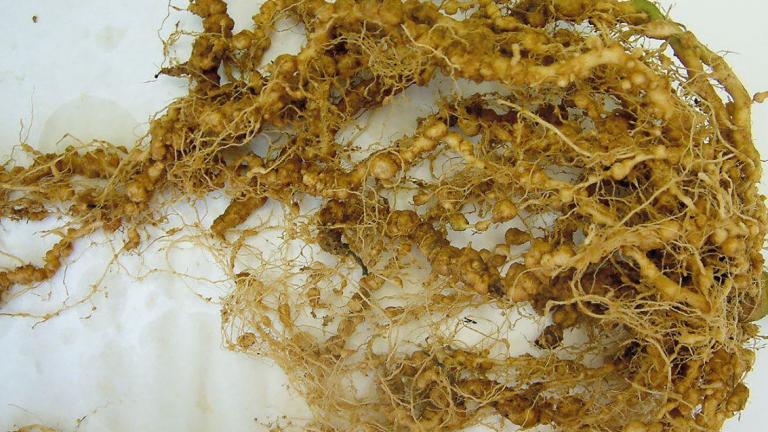
We all know managing resistance, especially in nematodes is important to protect your ornamental crops. Tervigo is a suspension concentrate (SC) containing 20 g/L Abamectin with the addition of an iron chelate, Fe-EDDHA 400 g/l. Abamectin is the active ingredient that provides the nematode control. Iron chelate is a micro fertilizer that provides crop enhancement effects especially in alkaline soils. The scienceThe Mode of Action in Tervigo is highly effective against the rootknot nematodes and other species of plant parasitic nematodes. Abamectin, the active ingredient in Tervigo, affects plant parasitic nematodes by blocking the transmittance of electrical activity in nerves, muscle cells stimulating the release and binding of gammaamino butyric acid (GABA) at nerve endings.This causes an influx of chloride ions into the cells, which lead to hyper polarization and subsequent paralysis of the neuromuscular systems and then death.This unique mode of action is effective on nematodes that are…
Downy mildew rose

17.01.2020Ornamentals Advisory Blog

Downy Mildew Care in Roses

Victor Juma

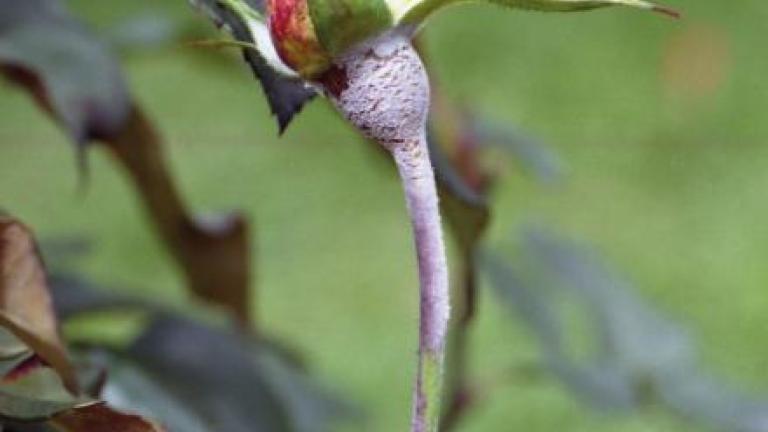
Roses are the leading cut flowers in global floriculture trade. Cut roses, either planted outdoors or in plastic greenhouses are susceptible to many phytopathogens. Downy mildew is among the most serious foliar diseases which affects the quality and yield of cut roses during production. Any damage on leaves, flower buds or stems affects quality standards and impact revenues. All rose cultivars grown in East Africa are susceptible to downy mildew, although they can differ greatly in their sensitivity.Downy mildew is caused by the oomycete Peronospora sparsa. It may cause severe losses under plastic greenhouses, but in heated greenhouses the disease may not be severe. Peronospora sparsa infects young leaves and stems at the shoot apex, peduncles, calyxes, sepals and petals. The first signs of the disease are angularly-edged, purple-red spots that evolve into dark brown lesions followed by defoliation of affected plants. In infected flowers and stems, purple brown lesions are common, accompanied by malformed…
car_4430_2_2

03.12.2019Ornamentals Advisory Blog

Are biological solutions the golden goose we're after?

Victor Juma

Questions. We’re surrounded by them on a daily basis. “Questioning” is seen as a positive thing, being “inquisitive” is a sign you’re “curious”. So this week I’m going to be asking the questions: Are biological crop protection products the golden goose we’ve been looking for? We, along with our competitors are continuously trying to bring products to market that have been designed to meet customer demands and over the past few years, we have seen more demand to deliver biological solutions as well. But something we actually want to know is, “why?” We are asked so often “when are you bringing a biological solution to market” and it’s not through lack of trying – they’re coming, but another question is, are you - the grower - willing to accept biological solutions with the Achilles Heel of less efficacy in peak stress periods? Is the customer willing to accept aphid damage, for example?Biostimulants all year round?I find the challenges of ornamental plant production fascinating. I know that…
unadjustednonraw

20.11.2019Ornamentals Advisory Blog

What's in the bottle?

Victor Juma

Everything is a formulation. From the products we use to clean our kitchens to the paint on our walls, to the milk you put on your cereal each morning. Yep. Even cows milk, which is basically fat dissolved in water, is a formulation. Striking goldIt all starts when we discover a new active ingredient. Depending what the physical properties are of that active ingredient, whether it’s a powder, gum or a viscous liquid, our formulation experts have the ability to create the appropriate formulation that’s familiar to you:WG – water dispersible granuleSC – suspension concentrateSL – soluble liquidEC – emulsifiable concentrateOD – oil dispersionThinking back to my previous blog, we get asked a lot about why we don’t bring more products to market or why it takes so long, but it is at this point it gets really tricky. Once we have the active ingredient and the appropriate formulation, we then have 2 million different components to sift through and just one of those variations is going…