search
tune Filter your result
Filter close
Select filter keyboard_arrow_right
arrow_back Back to filters
spider mites

06.04.2021Ornamentals Advisory Blog

Combating two-spotted spider mite

Daisy Ngeno

Spider mites are tiny 8-legged animals closely related to spiders. Several kinds are important pests of ornamental crops, shrubs, and bedding plants. Under favorable conditions spider mites can build up rapidly and seriously threaten plant health.All of these spider mites feed on plant leaves by piercing leaf tissues and sucking the green liquid that oozes out. Leaves appear bronzed after the green color is lost from many tiny feeding spots. Heavily infested leaves and branches can become covered with an almost invisible webbing.The best way to confirm a spider mite infestation is to hold a sheet of white paper under a branch and then to tap the branch sharply. If present, they will fall off and be seen as tiny specks crawling over the paper. Crawling is the characteristic that most clearly distinguishes mites from the grit that can also be knocked off a plant.    Two-spotted spider mite Tetranychus urticae (Koch)The two-spotted spider mite is oval in shape, about 1/50-inch-long and…
aphids myzus persicae

24.03.2021Ornamentals Advisory Blog

Aphids on Ornamentals

Daisy Ngeno

Aphids are serious pests in ornamental plants, causing both direct and indirect damages through loss of saps, deformation, discoloration, abnormal development, reduced photosynthesis because of sooty mold growth, and transmission of plant viruses which may have severe economic impacts. The control strategies against aphids infesting ornamental plants typically involve of synthetic insecticides.Aphids are economically important pests on many ornamental crops. Under the optimal environmental conditions of the greenhouse, parthenogenetic (asexual) and viviparous (live-bearing) reproduction can continue year-round. In such circumstances, large populations are quick to develop.Aphids damage crops directly, wilting and distorting leaves and flowers as they feed, but they also cause a number of other problems. The physical presence of a large number of aphids can be a cause for concern, and the honeydew they excrete as they feed promotes the growth of black sooty molds, which in turn reduce the crop's…
my post 34

22.03.2021Ornamentals Advisory Blog

Food for thought: the Scout decision

Victor Juma

In 1907, Baden-Powell, an English soldier, devised the Scout motto: Be Prepared. That’s always a good plan in all areas of life, including the horticultural sector, where pests and diseases can have devastating effects on crops and on the grower’s bottom line.Both greenhouse and outdoor crops are susceptible to many pests and diseases which cause irreversible damage and can lead to serious economic losses. Because of the low tolerance for damage, ornamental crops require regular scouting and an effective pest management strategy to ensure that a higher marketable quality is maintained. A good crop scout can be a valuable asset to a grower. If no scouting function is performed, there is little or no chance of early problem detection and identification. Growers need to keep a close eye on each field throughout the growing season to avoid crop losses.The cornerstone of an Integrated Pest Management (IPM) program is scouting or monitoring plants for insects, diseases, weeds, nutrient deficiencies,…
downy mildew rose

22.03.2021Ornamentals Advisory Blog

Downy mildew in roses

Victor Juma

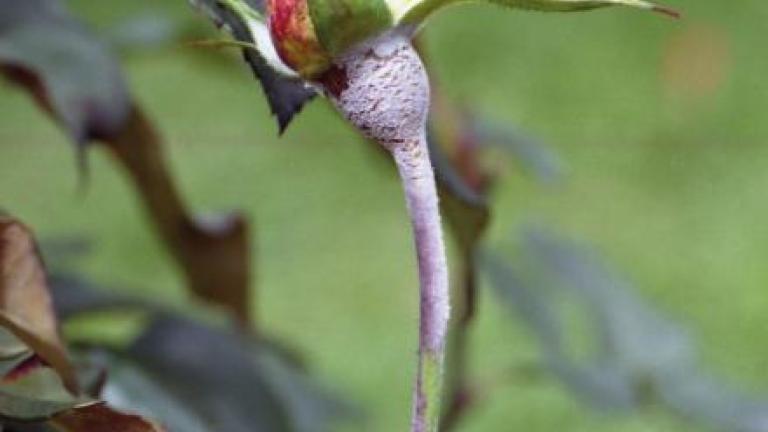
Roses are the leading cut flowers in global floriculture trade. Cut roses, either planted outdoors or in plastic greenhouses are susceptible to many phytopathogens. Downy mildew is among the most serious foliar diseases which affects the quality and yield of cut roses during production. Any damage on leaves, flower buds or stems affects quality standards and impact revenues. All rose cultivars grown in East Africa are susceptible to downy mildew, although they can differ greatly in their sensitivity.Downy mildew is caused by the oomycete Peronospora sparsa. It may cause severe losses under plastic greenhouses, but in heated greenhouses the disease may not be severe. Peronospora sparsa infects young leaves and stems at the shoot apex, peduncles, calyxes, sepals and petals. The first signs of the disease are angularly-edged, purple-red spots that evolve into dark brown lesions followed by defoliation of affected plants. In infected flowers and stems, purple brown lesions are common,…
Rose Rust

19.03.2021Ornamentals Advisory Blog

Rust diseases in ornamentals

Daisy Ngeno

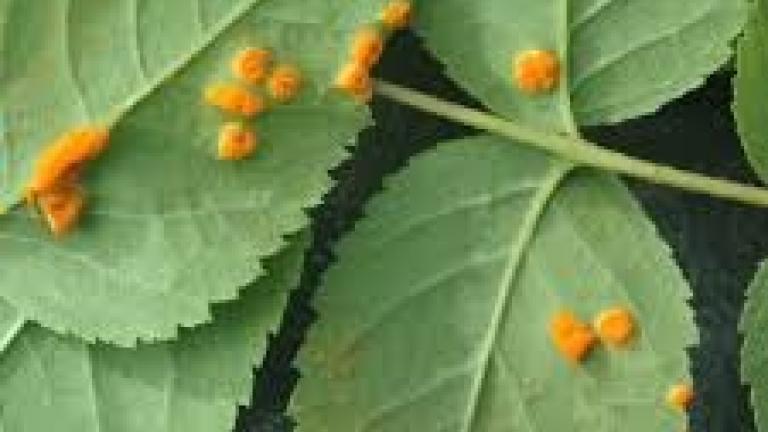
Rust diseases are common fungal infections that affect a wide range of floricultural crops, including Carnation, Roses, Chrysanthemums, Hypericums, Fuchsia, Geraniums, Gladiolus, Lilium, Marigold, Poinsettia, Snapdragons, Statice and Viola (including pansy). Rusts have the potential to negatively impact floriculture production. Rust fungi are obligate parasites, dependent upon a live host for growth and development, and seldom kill plants. However, rust infection reduces plant health and vigor, flower production, and aesthetic value.SymptomsEach type of Rust has its own distinctive symptoms and its own specific plant hosts. The disease often first appears as chlorosis on the upper surfaces of leaves. All rust fungi produce powdery masses of spores in pustules, typically on leaf undersides that are yellow, orange, purple, black or brown. Some Rust fungi produce pustules on upper leaf surfaces as well. Spores are easily spread on air or with splashing water. Lesions may coalesce resulting in large areas of…
botrytis

01.03.2021Ornamentals Advisory Blog

Fighting Botrytis in ornamental crops

Victor Juma

Botrytis cinerea (grey mould) is one of the most widespread and destructive fungal diseases of ornamental crops. It infects over 200 plant species worldwide causing annual losses of $10 billion to $100 billion. Botrytis cinerea is responsible for the grey mould disease in a number of ornamental crops including roses, carnations, violet, begonia, chrysanthemum, gerbera, dahlia and geranium reducing both quality and yield. In ornamental crops, yield loss can be total because infected cut flowers are rejected at auctions.Read more about the life cycle of botrytis and get some useful resistance management advice, click here.The majority of losses caused by B. cinerea in cut flowers occur in the packing house and during transport to the market. Botrytis cinerea is aggravated by latency of the petal infection, which may not present visible symptoms at the time of flower harvest.  Although flowers are handled at temperatures between 2 and 10°C after harvest, higher incidence of B. cinerea has been observed,…
downy mildew rose

13.01.2021Ornamentals Advisory Blog

Measures for mildews

Victor Juma

Despite their similar names they’re completely unrelated: powdery mildews are fungi while downy mildews are oomycetes, the same group of micro-organisms as those troublesome root diseases Pythium and Phytophthora. Oomycetes share some of the superficial characteristics of fungi but much of their genetics and biochemistry are totally different.It’s useful to talk about powdery and downy mildews together here, though, as understanding their similarities and differences is key to managing them well. It’s often easy to confuse the symptoms but you need to get it right as not all products effective on the one can control the other.A good ‘rule of thumb’ is that the fungal growth and powdery sporulation of powdery mildew tend to be seen on the upper surface of the leaf while the downy-textured oomycete pathogen tends to grow on the leaves’ underside.Both are favoured by damp and humidity so all the environmental management measures ­– good air movement and humidity control, and avoiding situations where leaves sit…
Downy mildew rose

25.09.2020Ornamentals Advisory Blog

Guide to the main fungicide modes of action

Victor Juma

Here we outline the main elements of pathogen biology that different fungicides are designed to target. Within each broad mode-of-action category, fungicides are classified by a FRAC code according to their own chemistry, the specific biochemistry in the pathogen they affect, and their likely risk of pathogen resistance, which is why several fungicides with a shared chemistry may have the same FRAC code. All of those listed here include one or more products authorised in the UK but not all have products authorised for ornamentals.Mode of action: Nucleic acids metabolismFRAC codes 4, 8, 32Several fungicides interfere with the way the molecules that genes are made of, the nucleic acids DNA and RNA, are created or copied in cells. As a result growth, reproduction and the pathogen’s ability to control key aspects of its biology are disrupted.The target for these fungicides are four key enzymes involved in nucleic acid metabolism.Most are at a medium to high risk for resistance, and for cross-resistance between…
Downy mildew rose

26.08.2020Ornamentals Advisory Blog

Understanding how fungicides work

Victor Juma

Understanding how fungicides work ­– their mode of action ­– not only helps in the design of spray programmes when new diseases or resistant strains of pathogen appear, it helps you minimise the risk of fungicide resistance evolving in the first place. Have a look at my earlier blogs on insecticide resistance, as the principles behind resistance management are similar for insecticides and fungicides. As the number of active substances authorised for horticultural use contracts, it’s vital to use treatments in a way that prolongs their effectiveness but delays or avoids the occurrence of resistance.As with insecticide resistance in pests, a pathogen that develops resistance to a fungicide is often cross-resistant to others that share similar chemistry – but resistances that affect all the active substances targeting one area of an enzyme or one step in a biological process don’t necessarily confer cross-resistance to those targeting another part. And in some cases resistance to one group of actives can make…
Downy mildew rose

26.08.2020Ornamentals Advisory Blog

Fungicides & their modes of action

Victor Juma

Plant pathogens are just as likely to evolve resistance to fungicides as insect pests are to insecticides, and for the same reasons, which are outlined in my recent blog on insecticide resistance.Botrytis and downy mildews, for example, are regarded as being at high risk of this, thanks to their rapid rates of reproduction and a genetic makeup that’s particularly quick to respond to selective pressure. Such pressure can come from repeated use of the same fungicide or from the mechanisms plant breeders harness to introduce disease resistance into crops ­– breeding for downy mildew resistance, for example, is something of an ‘arms race’.On our pest & diseases pages, you can find help with planning resistance management strategies against some of the pathogens most prone to developing fungicide resistance, including Botrytis, downy mildews and powdery mildews. We give examples of fungicides with different modes of action – and which therefore target different aspects of the pathogen’s…
whitefly squ4

25.08.2020Ornamentals Advisory Blog

Insecticide resistance: let groups be your guide

Victor Juma

In my last blog I looked at why repeated use of insecticides with the same mode of action can lead to resistance evolving in pest populations.A mutation which makes a pest resistant to a particular active substance often confers resistance to other actives that share similar chemistry or are designed to target the same area of the pest’s biochemistry, a phenomenon known as cross-resistance.The enzymes and other molecules that an active substance is aimed at, however, are much larger than the insecticide molecules themselves, so should resistance develop to all the actives working on one area of an enzyme, it won’t necessarily cause cross-resistance to those focused on another part of the same enzyme. In some cases resistance to one group of actives can actually make the pest more sensitive to another – that’s called negative cross-resistance. The potential for resistance is also affected by factors such as the persistence of the insecticide on the crop or in the environment.All these factors are taken…
whitefly squ4

17.08.2020Ornamentals Advisory Blog

Insecticide resistance: know your modes of action to stay a step ahead of evolution

When it comes to insect pest control in particular, you can expect fewer chemical insecticides to draw from over time (see my last blog). Managing resistance risks to prolong the effective life of the products that remain becomes ever more important. So in this and my next blog I want to have a look at how understanding their mode of action can help.Action and resistanceIn my blog about product development I outlined how an active substance ‘targets’ a particular section of a pest’s biochemistry. In any pest population there’s likely to be a few individuals that happen to carry random mutations affecting the same biochemical pathway ­– small enough to have little effect on their ability to survive and reproduce but just enough to mean the active can’t work well or gets broken down by the pest’s metabolism.It becomes a case of natural selection. Carry on using the same active substance – or any others that are designed to interfere with the same area of pest biochemistry – and those resistant individuals are…