search
tune Filter your result
Filter close
Select filter keyboard_arrow_right
arrow_back Back to filters
Segovis® Flora Launch

13.05.2026Ornamentals Advisory Blog

Syngenta to Launch Segovis® Flora: Advancing Downy Mildew Control for Ornamentals

Syngenta  to Launch Segovis® Flora: Advancing Downy Mildew Control for OrnamentalsSyngenta East Africa will be launching Segovis® Flora, an innovation developed to strengthen downy mildew control in ornamental crops, through a series of events across the country’s major flower-growing regions from late May to mid-June 2026.Kenya’s floriculture industry is built on precision, consistency, and quality. Yet downy mildew remains one of the most disruptive diseases in ornamental production. When conditions favour infection, particularly periods of high humidity and cooler temperatures, disease can spread rapidly, reducing quality, and increase production costs  and ultimately affecting marketable yield. For farms supplying premium export markets, the impact can extend beyond the crop to harvest schedules, customer confidence, and business continuity.Innovation that supports performance and stewardshipModern ornamental production requires solutions that deliver strong performance while supporting…

Segovis Flora Blog

06.05.2026Ornamentals Advisory Blog

Downy Mildew in Roses: Protecting Your Investment from the Most Costly Disease

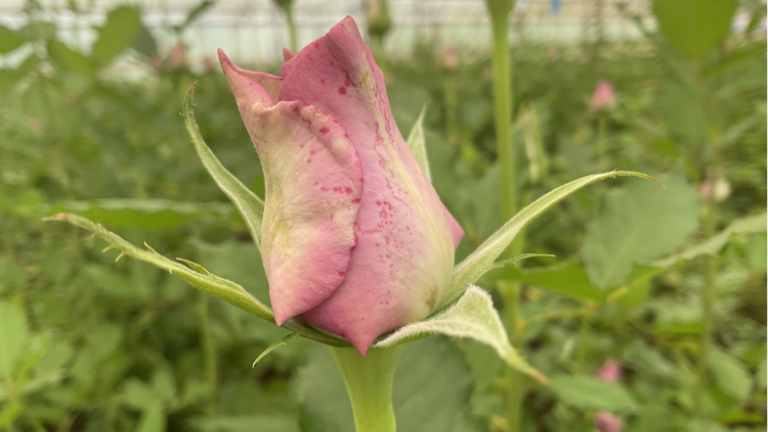
The morning inspection should have been routine. Instead, you're staring at irregular purplish-red blotches spreading across premium rose leaves—the unmistakable symptoms of downy mildew. Within days, if left unchecked, these spots transform into gray, fuzzy patches, and export-quality blooms become unmarketable rejects. For Kenyan rose growers supplying EU and Middle East markets, downy mildew caused by Peronospora sparsa represents one of the most devastating threats to productivity, capable of destroying 15–25% of crop yield in severe outbreaks.Understanding this disease is the first step toward effective control. Unlike true fungi, Peronospora sparsa is an oomycete pathogen that thrives in cool, humid conditions common in rose-growing regions. The pathogen flourishes when relative humidity exceeds 80%, with prolonged leaf wetness providing ideal infection conditions. These environmental factors, combined with the pathogen's rapid reproduction cycle, explain why downy mildew can explode from a few…
Thrips

15.04.2024Ornamentals Advisory Blog

An Overview of Effective Thrips management in Ornamentals

Victor Juma

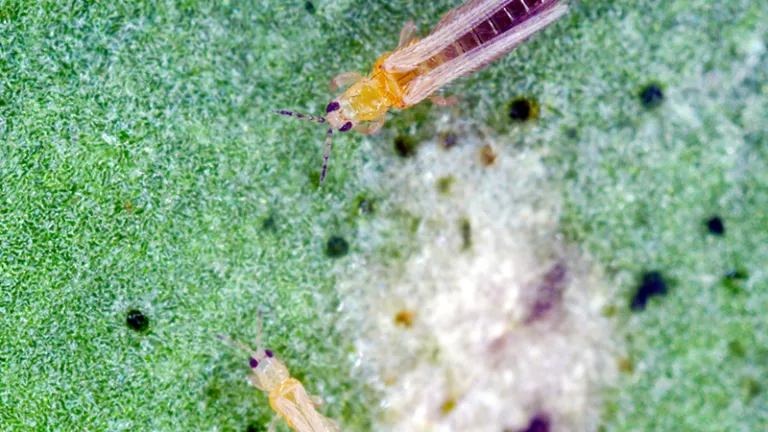
 Signs and symptoms of thrips infestation.Thrips are tiny, slender insects that feed on plants by rasping and sucking out the contents of plant cells. Thrips are often found on flowers, fruits, and leaves. Common symptoms of thrips on ornamental plants include discoloration of petals, distortion of leaves and flowers, and stunted growth.  Silvering or stippling on the leaves, as well as black fecal droppings left behind by the thrips are clear signs of infestation. Yellow or blue sticky traps in monitoring thrips populations is a noble practice. Proactive measures to control them before they cause significant damage. There are over 6,000 species of thrips found in a wide range of habitats. Each species of thrips may have specific feeding preferences and behaviors, making them a challenging pest to manage. Among the most common species of thrips include the Western Flower Thrips (Frankliniella occidentalis), the Onion Thrips (Thrips tabaci), and the Chilli Thrips (Scirtothrips dorsalis) which…
Botrytis Management Strategies: Preparing for El Nino and Ensuring Quality Crop Protection.

23.10.2023Ornamentals Advisory Blog

Botrytis Management Strategies: Preparing for El Nino and Ensuring Quality Crop Protection.

The short rains are almost here! El Nino is around the corner! This may be good news for growers who are facing challenges of water availability. But to others, the mention of El Nino sends chills down the spine- the fear of botrytis! With the high season in sight, cut-flower growers are expecting to have a good harvest. The worst that can happen is to have weather-related crop losses.What is the problem?The real issue is not about El Nino or the lack of it but about preparedness. Preparedness to minimize or avoid losses due to botrytis - a polymorphic pathogen! Botrytis infections occur throughout the supply chain and may remain latent until produce is at the retail outlets. How would you feel if you were to receive a CAR (corrective action request) from clients thousands of miles away?As a seasoned grower, do you have a botrytis management strategy? Botrytis strategy at best is about growing and caring for crops with the aim of stopping botrytis infection. It ensures consistency in delivering quality and…
Integrated pest management for sustainable agriculture

11.10.2023Ornamentals Advisory Blog

Integrated pest management for sustainable agriculture

Integrated Pest Management (IPM) is an effective and environmentally sensitive approach to pest management that relies on a combination of common-sense practices. IPM programs use current, comprehensive information on the life cycles of pests and their interaction with the environment. This information, in combination with available pest control methods, is used to manage pest damage by the most economical means, and with the least possible hazard to people, property, and the environment.IPM is a critical component of sustainable agriculture which provides the most cost effective, environmentally sound and socially acceptable method of managing diseases, insects, weeds and other pests in agriculture. By using a combination of methods to control pests, IPM reduces the reliance on chemical pesticides, protects beneficial organisms, reduces environmental impact, and maintains a healthy ecosystem. The use of IPM practices can also improve pest control and reduce the risk of developing pesticide-resistant pests,…
The Power of Biostimulants

09.08.2023Ornamentals Advisory Blog

The Power of Biostimulants

IntroductionThe use of biostimulants for agricultural production is not new with ornamental growers in East Africa with many products already in use. However, there is little understanding of what constitutes a biostimulant or what their benefits are. Biostimulants include:Organic substancesInorganic substancesMicroorganismsDu Jardin (2015) defined biostimulants as any substance, or mixture of substances of natural origin or microorganism which improves the condition of crops without causing adverse side effects. This implies that substances containing proteins, amino acids, enzymes, or proteins may be used as biostimulants. Stimulants of natural origin including humic acids, protein hydrolases, salicylic acid, seaweed extracts, humic acids, fluvic acids, beneficial fungi and bacteria are also categorized as biostimulants (Chiaiese, Corrado, Colla, Kyriacou, Rouphae, (2015).Biostimulants are distinguished by their application method, which is either foliar or soil applied. The source of production…
Nematode

07.06.2023Ornamentals Advisory Blog

Sustainable Approach to Nematodes Management

Victor Juma

Plant parasitic nematodes (PPN) are one of the important and destructive pests in floriculture, attacking several varieties of cut flowers throughout the year. Plant parasitic nematodes cause direct and indirect damage leading to a decrease in yield, loss of quality, increased production cost, and reduced profitability. The cost of managing PPNs varies from region to region and is estimated to be between 7 % to 15 % of total crop production costs and up to 26% to 31% losses on some cut flower varieties. The losses are due to crop retardation, poor-quality unmarketable stems, and the death of plants due to opportunistic soil pathogens leading to higher disease severity and massive crop losses.Growers are faced with difficult decisions due to limited active ingredients targeting nematodes, market restrictions on some active ingredients, and limited financial resources. This calls for a rapid and sustainable nematode management program. Accurate sampling and identification of nematodes, and proper intervention…
Guide for mites’ management on ornamentals

07.02.2023Ornamentals Advisory Blog

Guide for mites’ management on ornamentals

Mites are part of the Arachnida, a major class of arthropods. They are in the subclass, Acari hence the insecticides used to kill these pests are called acaricides. The Acari subclass consists of a wide range of Orders or groups of related mites – the main pest Order is the Prostigmata. The most common mites species found in the greenhouse are:• Red spider mite (or two spotted mite) Tetranychus urtica • Carmine spider mite Tetranychus cinnabarinus • Bulb scale mite Stenotarsonemus laticepsEffect of temperature on population development of T .urticae on roses Chemical control options from SyngentaSyngenta offers several products for mites’ control with different modes of action to minimize the onset of insect resistance. Most acaricides provide some control of the Tetranychidae, whereas the Tarsonemidae and Eriophyidae may require acaricides with translaminar movement to complete the control of mites which are concealed in buds and tightly folded leaves. Control can be achieved through applications…
Watch out on thrips in your farm

23.01.2023Ornamentals Advisory Blog

Watch out on thrips in your farm

Thrips, order Thysanoptera, are tiny, slender insects with fringed wings. They feed by puncturing the epidermal (outer) layer of host tissue and sucking out the cell contents, which results in stippling, discolored flecking, or silvering of the leaf surface.Thrips feeding is usually accompanied by black varnishlike flecks of frass (excrement). Pest species are plant feeders that discolor and scar leaf, flower, and fruit surfaces, and distort plant parts or vector plant pathogens. Many species of thrips feed on fungal spores and pollen and are often innocuous. However, pollen feeding on plants such as orchids and African violets can leave unsightly pollen deposits and may reduce flower longevity. Certain thrips are beneficial predators that feed on other insects and mites. Thrips can readily move long distances floating with the wind or transported on infested plants, and exotic species are periodically introduced. IdentificationMost adult thrips are elongate, slender, minute (less than 1/20 inch long),…
Powdery Mildew Solutions Guide

12.01.2023Ornamentals Advisory Blog

Complete Solution Guide for Powdery Mildew Management

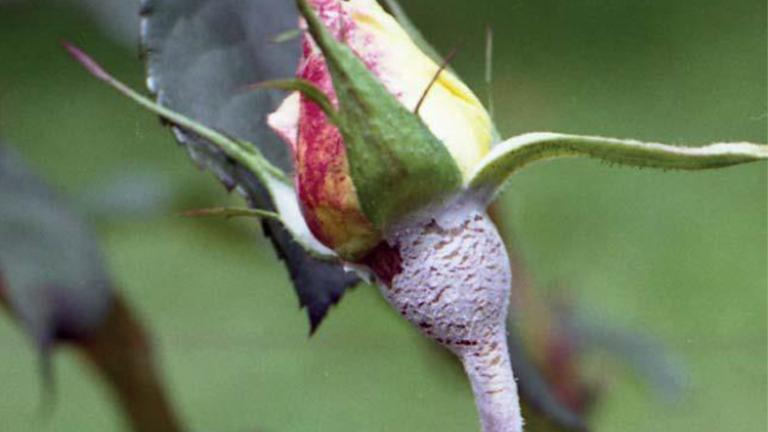
​As warm, dry weather settles in this month, be alert for the development of powdery mildew on your ornamental crops. Powdery mildew is a common dry season problem on many types of flowers. But most powdery mildew can be avoided or cured with inexpensive remedies that have been proven to work well.Powdery mildew thrives when foliage is dry and the weather is warm; wind spreads the spores to other plants. In fact, powdery mildew spores can’t germinate or grow when foliage is wet, so overhead watering is sometimes recommended as a preventative measure on highly susceptible crops.Identification and DamageYou can recognize this disease by the white, powdery mycelial and spore growth that forms on leaf surfaces, shoots and sometimes on flowers and fruits. Powdery mildew may infect new or old foliage. This disease can be serious on woody species such as rose, crape myrtle, and sycamore where it attacks new growth including buds, shoots, flowers, and leaves. New growth may be dwarfed, distorted, and covered with a…
Spotlight on Biostimulant

05.12.2022Ornamentals Advisory Blog

Spotlight on Biostimulant

What is a Biostimulant?A substance or micro-organism that, when applied to seeds, plants, or on the rhizosphere stimulates natural processes to:Enhance nutrient uptakeBetter nutrient use efficiencyEnhance tolerance to abiotic stress, crop quality and yield NB: The purpose of Biostimulants is to stimulate plant growth and optimize plant health.Key stresses that Biostimulants addressClimatic stresses (Drought, Heat and Cold Stress) refer to an external stress upon a crop originating from a prolonged environmental condition outside of a reasonable normal.Successful Biostimulants will expand the adaptable range of a crop measured through yield quantity and quality.Soil health / Salinity refers to the maintenance and enrichment of soil to prevent and reverse soil degradation.Successful Biostimulants will increase the potential of soils to sustain growing crops through directly targeting soil environments.Crop quality refers to increasing a measurable aspect of crop growth or production resulting in an…
powdery mildew

08.08.2022Ornamentals Advisory Blog

Powdery Mildew Solutions Guide

Daisy Ngeno

Powdery mildew fungi form white, talcum like spots called “colonies” on leaves, stems and flowers. Over time, these colonies increase in size and number to cover the plant’s surface. If not controlled, severe infections will cause leaves to turn yellow, brown and then drop, resulting in reduced plant vigor and growth. While powdery mildew is often first observed on the upper surface of the leaves, both sides may develop colonies, so it is important to check both sides of the leaf when scouting.Susceptible CropsSeveral different fungi cause powdery mildew, and each prefer different plants. The fungi listed below favor the corresponding plant types. Erysiphe cichoracearum is a common powdery mildew fungus that can infect many plants, including: SymptomsWhite powdery spots or coating on both sides of leaves, stems and young buds.Flower petals and bracts of poinsettia can also be affected.Yellow or brown leaves.Distorted leaves and flower buds or undeveloped flowers.Stunted growth.Powdery mildew can be more…