search
tune Filter your result
Filter close
Select filter keyboard_arrow_right
arrow_back Back to filters
Plant spraying

28.10.2025Expert Centre blog

Operators: Reducing your exposure levels

Daniel Lightfoot

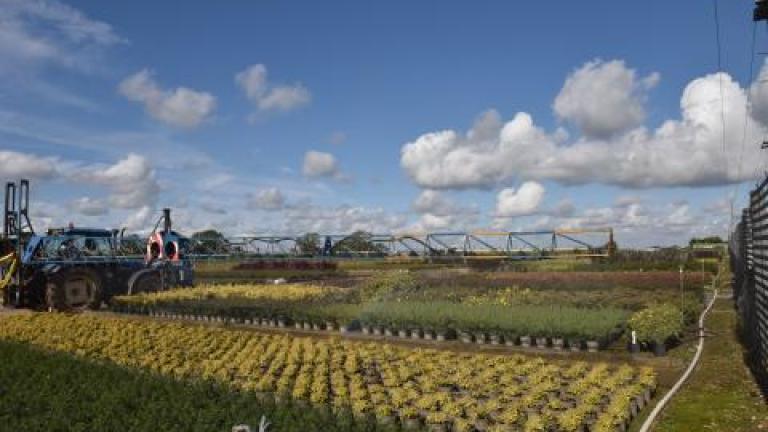
Welcome to the first blog in our Art of Application series!Ornamental controls is a fairly new area for me and whilst I have over 20 years of hands-on experience in spray applications in the turf industry, the challenges faced in other industries never fail to surprise me.Having recently spent some time at a nursery in the East of England, a big thing that struck me was the exposure levels that some operators are facing in this industry. Spray operators dealing with arable crops, or even those I’m familiar with in turf, their advantage is that they’re always outside when spraying, minimising their exposure. Being outdoors is not always so easy for ornamental growers.Year-round spraysThe year-round nature of this industry and low tolerance to imperfections can lead to regular applications of crop protectant products to ensure high-quality plants are produced. In previous blogs we have talked about seasonality, perhaps high standards is a future blog piece?What can you do?For horticultural spray operators, the…
Farm

28.10.2025Expert Centre blog

One nozzle for all jobs - surely that's OK?

Daniel Lightfoot

When you look at the cost of products, the time invested in applying said products, the investment made in a spray rig and the value of a crop, I’m always amazed at the small amount of thought that goes into nozzle selection. Many customers I visit will have one nozzle – I think I’m right in saying this is a sub £10 part?Begs the question – why not invest a little time and effort into thinking about which one to use? All good nozzle charts will show the spray quality of your selected nozzle at varying pressures. Whilst the charts will show a wide range of pressures the nozzle can be used in, I personally would rather see the pressure set to its optimum rather than compromise the pattern of the spray. Thinking back to my last blog of conscious compromise, this isn't something I would compromise on. A bit like you wouldn't drive a Ferrari and then have dodgy, worn out tyres on there, considering they are the things that are keeping you on the road.After all there is a nozzle designer out there…
basis

28.10.2025Expert Centre blog

Need BASIS points for ornamentals? Sign up!

Elizabeth Green

Being BASIS qualified in the ornamentals arena can sometimes prove difficult to get the number of points you need each year. Therefore you will be pleased to know that just by signing up to our ornamentals advisory blog, you can get one CP point. All you need to do is sign up for blog updates and send us your full name, BASIS account number and your postcode, we will do the rest. Simple! Our blogs are written by our inhouse horticulture experts and cover a wide range of new and exciting horticulture subjects like ...BiostimulantsAdjuvantsResistance ManagementHorticulture pests and diseasesMuch much more - take a look for yourself.Don't forget you can get more infromation from our social channels, so follow us on your favourite channel for more updates, information and advice.Facebook: Syngenta Ornamentals UKInstagram: syngenta_ornamentalsTwitter: @SyngentaOCUK  
Thrips

28.10.2025Expert Centre blog

Managing insecticide loss - the balancing act

Daniel Lightfoot

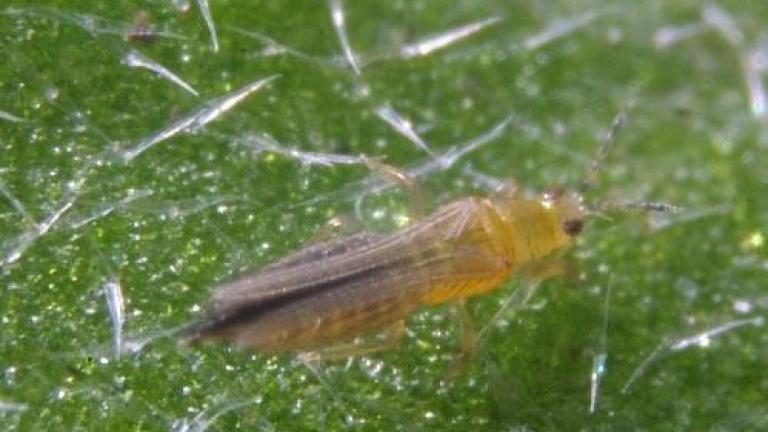
Anyone who has experienced difficulties managing insect pests such as western flower thrips will be only too aware of the implications of our ever-diminishing armoury of control products. Their short life-cycles mean they readily develop insecticide resistance if we can’t deploy enough different chemical, cultural or biological modes of action to foil their evolutionary ‘quick-wittedness’.In the last few years farmers and growers have seen substantial reductions in the range of crop protection chemistry they can draw on to control pests, diseases and weeds and that trend is likely to accelerate over the next couple of years or so. That in turn has repercussions for how we manage insecticide, fungicide and herbicide resistance because successful resistance management depends on having to hand more than one or two chemical modes of action.This gradual contraction of our crop protection toolkit is nothing new, of course, but it has come under the spotlight this year because the approvals of more than 190 active…
Leaf

28.10.2025Expert Centre blog

Introducing Elasto G5 - the brand new adjuvant

Daniel Lightfoot

Elasto G5, the new spray adjuvant launched by Syngenta, is designed to boost retention and uptake of crop protection products on ornamentals with very low risk of phytotoxicity or harm to beneficials.“With the ever-dwindling range of active substances available, and ever-tighter restrictions on doses and application timings, it’s crucial to make sure every spray you apply is as effective as possible,” says Daniel Lightfoot, Syngenta Ornamentals UK business manager. “That’s where the adjuvant technology in Elasto G5 can really make a difference".  “Optimum performance is particularly important when it comes to biological active substances and Elasto G5 is equally safe and effective when used to partner these.”Elasto G5 is based on polyglycerol and coconut fatty acids. These renewable ingredients were chosen for their ability not only to reduce the surface tension of spray droplets – so they stick to and spread on, rather than bounce or roll off, a leaf surface – but also because they aid the passage…
spider mites

28.10.2025Expert Centre blog

Integrating chemicals and beneficial’s – that makes no sense?

Daniel Lightfoot

There are some real insect challenges in ornamentals, including thrips and spider mites, for which the development of new crop protection products for the protection of ornamentals, despite all the efforts put in place by Syngenta, and the rest of the sector are simply are not coming fast enough. At the same time, the portfolio of available solutions is decreasing due to an increasingly stringent regulatory system. Put simply, protection products for ornamentals are progressively decreasing.For this reason, it is important to use available products such as Dynamec wisely, by implementing appropriate rotation, which involves alternating products with different modes of action.  By doing this we can maintain the effectiveness of products, avoiding resistance issues.So how can we manage an entire defence program by alternating fewer available crop protection products? What tools do we have to keep these crop protection products effective over a longer period of time?To help overcome this…
Whitefly

28.10.2025Expert Centre blog

Insecticide resistance: know your modes of action to stay a step ahead of evolution

Daniel Lightfoot

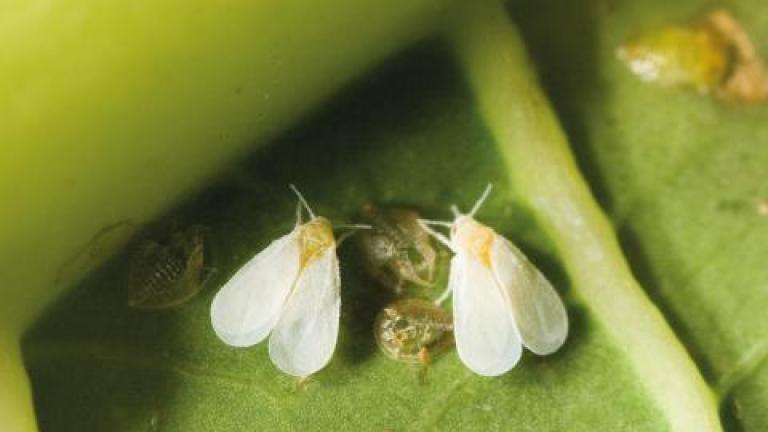
When it comes to insect pest control in particular, you can expect fewer chemical insecticides to draw from over time (see my last blog). Managing resistance risks to prolong the effective life of the products that remain becomes ever more important. So in this and my next blog I want to have a look at how understanding their mode of action can help.Action and resistanceIn my blog about product development I outlined how an active substance ‘targets’ a particular section of a pest’s biochemistry. In any pest population there’s likely to be a few individuals that happen to carry random mutations affecting the same biochemical pathway ­– small enough to have little effect on their ability to survive and reproduce but just enough to mean the active can’t work well or gets broken down by the pest’s metabolism.It becomes a case of natural selection. Carry on using the same active substance – or any others that are designed to interfere with the same area of pest biochemistry – and those resistant individuals are…
Orna blog tank

28.10.2025Expert Centre blog

How much in the tank; how much on the crop?

Daniel Lightfoot

What are the different ways to specify an application rate?How do I interpret application rate information for my crop?Making an application at the correct rate is crucial both to achieving the optimum effects from the plant protection product you’re applying and to protecting yourself and the environment.Sounds easy enough when you say it. But as we all know, it’s no mean feat to achieve in practice on an ornamentals nursery with all our great diversity of crop shapes, sizes and growth stages; less than ideal equipment in many cases; and various irrigation infrastructure and greenhouse stanchions getting in the way. Farmers spraying flat arable fields have it easy by comparison.When you look at the product label, you can find rates expressed in two different ways: a dilution rate for the amount of product you should mix with water in your spray tank; and an application volume rate, which puts a certain amount of that spray mixture – and hence product – onto the crop.They both need to be taken into account…
Flowers

28.10.2025Expert Centre blog

How adjuvants help give your applications the edge

Daniel Lightfoot

Our Art of Application programme is all about getting the best result from every spray you apply to your crop ­– making every drop count, if you like. Pairing the right adjuvant with your pest or disease control product or plant growth regulator is going to become an increasingly important aspect of that.Why? Because in today’s world of ever-tighter restrictions on rates and how and when to apply, the right adjuvant can help to get more of the active ingredient onto the target, make sure it stays there, and in many cases enhance its uptake too.Adjuvants are also likely to play more of a role in broadening the range of crop protection products available to you to select from, through optimising the performance of those that might otherwise be regarded as less effective than you need. As biopesticides become more widely used it could be critical to partner them with appropriate adjuvants for adequate performance.Some adjuvants will also enable you to use coarser droplets, which can help the spray to penetrate…
Flowers

28.10.2025Expert Centre blog

Flowers do feed the soul. But the soul of our flower industry is being ripped apart

Elizabeth Green

Never has one phrase conjured up so much conversation and emotion as “Covid-19”. A quick Google of Covid-19 brings up 10.9 billion search results, while Corona Virus brings up over 17 billion results, all in 0.36 seconds. Incredible. That doesn’t include the mind-boggling amount of tweets, Instagram posts, Facebook posts and memes that are flying around Whatsapp at the moment.At the moment, the global flower industry is having its soul ripped out by Covid-19. There are many growers unsure of their future, if there is a future at all for their businesses. And it’s not just the businesses, it’s the workers families as well.This got us thinking, we as a company employ thousands of people around the world, all affected by Covid-19 in one way or another. While we’re not a frontline company in the sense that we are not a hospital, our customers are suffering. Thinking back to our post earlier in the week, we’ve seen the videos of flowers being destroyed in Kenya and The Netherlands, let…
Plant spraying

28.10.2025Expert Centre blog

Don’t forget to register as a plant protection products user

Sean Loakes

I just want to remind you all that, if you’ve not already done so, you have until June 22 to register with Defra (or DAERA in Northern Ireland) as a user of professional plant protection products.The Official Controls (Plant Protection Products) Regulations, introduced two years ago, requires anyone who uses products such as insecticides, fungicides, herbicides, molluscicides, plant growth regulators and adjuvants as part of their job – or anyone whose job involves employing others to apply them – has to register.Registration includes giving details such as where products are kept and used. You will also need to keep usage records – though most will be doing so anyway as a matter of routine.The regulations are part of wider legislation, introduced by the EU in 2019 and retained in the UK post-Brexit, intended to bring an ‘integrated and uniform approach’ to rules across all aspects of the agri-food supply chain. Product manufacturers and suppliers already have to register under the regulations.According to…
Flowersfeed the soul

28.10.2025Expert Centre blog

Covid 19: Better days will return, if we #lethopebloom

Elizabeth Green

While the Covid-19 pandemic roles on, our Syngenta collagues, along with 1,000 other companies across The Netherlands, have committed to buying 150,000 blooms to give to nursing homes on Good Friday, to #lethopebloom. To keep the industry going through these difficult times, we arebuying these blooms from farmers ready for them to be distributed. To top it off, it’s been backed by the Dutch rapper Ali B, if people with 277,000 Twitter followers think it’s important, it must be.You may ask why are we not delivering these flowers to hospitals. Well in fact, we tried. The hospitals in The Netherlands are full to brim with donations. Whether that is donations of flowers, cookies or donuts, the Dutch are outdoing themselves when it comes to positivity.The UK is not left behindWe know here that #flowersfeedthesoul and we have not been left behind when it comes to donating flowers to those that would appreciate them. Many tulip producers, including E M Cole in Lincolnshire, have donated hundreds of blooms to local…