search
tune Filter your result
Filter close
Select filter keyboard_arrow_right
arrow_back Back to filters
Sempliance puts Box Tree Moth on the back foot

05.06.2026Expert Centre blog

Sempliance puts Box Tree Moth on the back foot

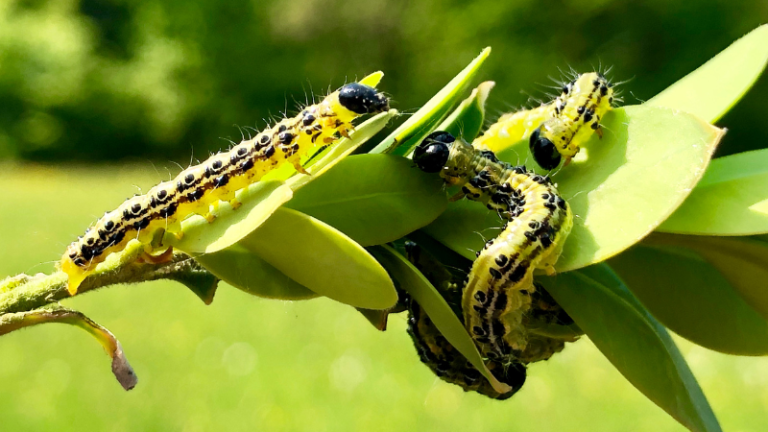
Box Tree Moth (Cydalima perspectalis) has become one of the most damaging pests in the UK ornamentals sector. Since establishing in Britain, it has spread aggressively, with Buxus plantings in nurseries, garden centres, and amenity landscapes all at risk. The pest is now firmly embedded in the UK pest calendar, capable of producing multiple generations per season and causing severe, often irreversible defoliation. With this in mind, Syngenta has proactively been implementing trials across Europe, using Sempliance (chlorantraniliprole), to mitigate these ever increasing challenges. What the trials showReplicated field trials conducted on Buxus sempervirens in the Netherlands and Italy across 2022 and 2023 consistently demonstrated strong control of Cydalima perspectalis with Sempliance.Netherlands 2022  Crop: Buxus sempervirens, Target: Cydalima perspectalis, 4 replications, 1,000 l/ha water volume, infestation: 10–20 eggs per plot, 6th MayAll Sempliance treatments delivered good control of Box…

How sempliance works

05.06.2026Expert Centre blog

How Sempliance works: a new tool for caterpillar control in UK ornamentals

Fast-acting, long-lasting, and built for IPMWith Sempliance now available to UK growers, we wanted to give a clear picture of what this new insecticide actually does, how it works, and why it's a welcome addition to the toolkit.What is Sempliance?Sempliance is an insecticide from Syngenta containing chlorantraniliprole, an active ingredient from the anthranilic diamide class of chemistry (IRAC Group 28). It is approved for use on ornamental plants grown in pots greater than 10cm in diameter, targeting a broad range of caterpillar species - including those that have become increasingly problematic on UK nurseries in recent years.A unique mode of actionWhat sets Sempliance apart from many conventional insecticides is how it works. Chlorantraniliprole targets the ryanodine receptors in insect muscle cells, disrupting the regulation of calcium ions and causing uncontrolled muscle activation. In practice, this means that caterpillars feeding on treated plant material quickly become paralysed - they stop feeding…
The caterpillar challenge facing UK horticulture

05.06.2026Expert Centre blog

The caterpillar challenge facing UK horticulture

A growing problem that growers can't afford to ignoreIf you've been working in UK horticulture for any length of time, you'll know that caterpillars are rarely far from the conversation. Whether it's the tell-tale ragged holes in leaves, skeletonised foliage, or the frustration of a crop that looked fine on Monday and looks very different on Friday, the damage caused by Lepidoptera larvae is a challenge that growers across the country have to deal with season after season.The range of species that affect ornamental crops in the UK is wide. Caterpillars from species including angle shades moth, carnation tortrix, and various noctuid moths regularly cause damage to a broad range of pot and bedding plants. And with the milder winters becoming more common than in previous years, the pressure isn't always confined to the warmest months, coupled with populations not naturally controlled in winter with lower temperatures.Limited options, increasing pressureFor professional growers, the challenge isn't just…
xmas tree

28.10.2025Expert Centre blog

Christmas tree champion

Elizabeth Green

Simply the bestForget the Oscars or a Nobel Prize, for a business that spends years growing the centrepiece of the festive period the ultimate accolade is being named Christmas Tree Grower of the Year. Organised every year by the British Christmas Tree Growers Association (BCTGA), the winner is bestowed the honour of providing the tree for one of the UK’s most famous residences – No 10, Downing Street. This year, Russell and Liz Stanhope from Bishops Offley Christmas Trees beat off stiff competition to win the honour. The pair planted their first trees in 1995 before gradually expanding. By 2000, Russell and Liz were ready to sell their first crop of Norway Spruce and they haven’t looked back since. “We’ve built the business up but we’re still relatively small at 10 acres,” Russell says.Russell and Liz were chosen as the Champions after impressing judges with their submitted tree, a Noble Fir. “The Noble Fir is a very difficult tree to grow,” Russell explains. “They’re stunning and…
art of application audience

28.10.2025Expert Centre blog

Maximising the potential of sprayable biologicals

Sean Loakes

The British Ornamentals Association conference highlighted a crucial challenge for growers: optimising spray techniques to get the best results from biologicals. With rising pressure to improve efficacy while reducing water use and drift, refining spray applications has never been more critical.The Art of ApplicationDeveloped through extensive research on ornamental nurseries, Art of Application is a Syngenta initiative designed to enhance spray efficacy. The goal is to ensure biologicals perform at their best by tackling common application challenges, such as blocked nozzles, spray coverage, and compatibility with existing equipment.Key factors for successFor biologicals to be widely adopted in grower programmes, they must meet several key criteria:Adequate shelf life to remain viable until useSuperior formulation to prevent nozzle blockagesTolerance to tank agitation and the forces exerted during sprayingPhysical and biological compatibility with other tank-mix products  Current challenges in…
AI and biostimulants

28.10.2025Expert Centre blog

AI speeds development of next generation biostimulants

Sean Loakes

 Syngenta and the pioneering artificial intelligence (AI) company TraitSeq have combined forces to use the full power of AI for the development of innovative, high-performance biostimulants.As a world leader in developing the next generation of biological products, Syngenta will use its extensive knowledge of crop biology to complement TraitSeq’s proprietary AI methods, to identify highly specific indicators of a plant’s cellular state, called biomarkers. When activated, these biomarkers can indicate how well a plant is responding to efforts to boost its health or to block the effects of external abiotic stressors. Biostimulants are applied to enhance natural plant processes, leading to increased tolerance to abiotic stress, an improved nutrient use efficiency or better plant health and quality. However, the performance of biostimulants as a vital and growing component of plant science can be variable, depending on environmental factors such as temperature and local climate.Using TraitSeq’s…
Bonzi

28.10.2025Expert Centre blog

Growing Summer 2025

Sean Loakes

With the summer solstice almost here and warm weather to boot things are looking positive for Ornamental plant production.  Growers have been busy shifting stock out of the door and the appetite for plants is really strong. For those who don’t get the HTA monthly market updates, they are a great way to keep your finger on the pulse of plant buying trends in the UK. Would definitely suggest subscribing if you don’t already. For May 2025: From HTA Market Update June 2025.It’s great to have some positive sales figures. Compared to rapidly moving stocks during the COVID 19 pandemic, the years after have been harder for many growers so it’s nice to have it moving in the right direction again and see demand on the rise. Across all the ornamental plant categories the numbers are looking really good, suggesting strong customer demand continues. For almost all plant groups sales are up compared to May 2024, with the exception of bulbs and hardy stock. But as you can see in the table below…
horticulture

28.10.2025Expert Centre blog

Taegro – new extension of authorisation for minor use (eamu) announcement

Elizabeth Green

Arundel, West Sussex, 3rd October 2022 – Fargro Ltd, a leading wholesaler and supplier of commercial horticultural products, announces that Taegro has been approved for use across ornamental plant production. Taegro, a broad spectrum biofungicide can now be used to protect your ornamental plants against diseases such as Alternaria (Alternaria brassicaicola), Botrytis (Botrytis cinerea), downy mildew (Plasmopara obducens), powdery mildew and sclerotinia (Sclerotinia sclerotium) with a new EAMU as of September 2022. Taegro, protects crops by producing metabolites which have disease suppressing qualities, eliciting defensive responses from the plant and competing for space and nutrients on the leaf surface. Taegro offers powerful broad-spectrum protection, enabling growers to save time and money by reducing the number of products required to protect against various diseases.Taegro has a benign environmental profile, is harmless to beneficial insects and pollinators, offers a…
red flower

28.10.2025Expert Centre blog

Growth regulators tested for poinsettia

Daniel Lightfoot

I was interested to catch up with a recent webinar summarising the findings from work this autumn by AHDB’s Bedding and Pot Plant Centre on PGRs for poinsettia – especially as the trials involved Syngenta’s Bonzi, and our new adjuvant Elasto G5 which we are planning to launch in the UK by the end of the year.Bonzi (paclobutrazol) is now one of the few PGRs with label approval for use on protected ornamentals, which is particularly important because of the confidence that offers in terms of effectiveness and crop safety.Poinsettias are shade-avoiding plants, which is why they tend to stretch on the nursery without a reliable PGR programme. The stretching is influenced by the plant hormone gibberellic acid. Bonzi works by inhibiting its production, which results in stem and leaf cells dividing more slowly, and a consequent reduction in stem growth and leaf expansion, without affecting the number of breaks.Chlormequat-type PGRs can influence the break number but are only available in the UK in…
UV to see the adjuvant story

28.10.2025Expert Centre blog

UV to see the adjuvant story

Sean Loakes

Where do adjuvants add value?Adjuvant’s, much like biostimulants, are products where it can be difficult to see the value, they add in a commercial crop straight away.Unlike conventional chemical treatments, they don’t claim to give you “90% disease control” or “reductions in pests in 24 hours”, such effects are typically clear to the eye. Adjuvants enhance the effects of other products, the problem with that is, it’s more difficult to see with your own eyes.On a recent trip to trial sites in Delft in the Netherlands I got a great opportunity to compare adjuvants with my own eyes. We know that different adjuvants have different properties, excluding uptake enhancers here, as we need leaf tissue analysis for those products. So, we could see the adjuvant on the crop, a formulated marker is added to the spray tank, imagine the stuff that makes your whites whiter in your washing machine, it’s the same concept. And by using a black light torch, you are then able to instantly see the spray effects.Try water…
thrips

28.10.2025Expert Centre blog

Monitoring thrips as the first line of defence

Elizabeth Green

 In the glasshouse, ornamental and floral crops enjoy the best possible conditions for their growth: temperature, humidity, light, spacing and fertilisation are factors which, especially in structures with the highest levels of technological inputs, are carefully controlled and regulated according to the needs of the plant. Unfortunately, these conditions are also optimal for most of the pathogens and pests that affect floral and ornamental crops, which take advantage of this situation to proliferate and cause damage to the crops. As we maintain an ideal environment for cultivation for a good portion of the year, biological cycles of pests are extend for much longer periods than would happen under ambient/outdoor conditions.Among the insects that commonly attack floral and ornamental crops, thrips, and in particular Frankliniella occidentalis (otherwise known as western flower thrips (WFT)) is present in glasshouses for a good part of the year, and can easily overwinter in our climate.Damage can present…
horticulture

28.10.2025Expert Centre blog

Climate Change: Does it affect professional horticulture growers?

Sean Loakes

When should I start my spray programme?Does climate change affect pest and disease activity? Climate Change: Horticulture growers should plan for flexibility in crop protection programmesAccording to the Met Office’s weather review, the winter we’ve just had was both drier and milder than the long-term average. Five of the 10 mildest winters on record have occurred since 2010.There have been numerous studies, too, on the impact of climate change on nature. One of the most recent, published in January, received a lot of publicity for its findings that flowering dates for many plant species in the wild have shifted forward by up to a month.Most scientists now agree climate change is happening, which has clear implications for everything from water availability to how you plan crop protection programmes.Plant pests and diseases don’t follow the human calendar so it has never been a good idea to base when you introduce your biocontrols or schedule preventive sprays on the same date year after year. But…